
Self-reflection: reread the story
“I always withdraw when a plan changes.” It sounds settled. Five notes from the same week leave room for a different reading.
This is a fictional week, September 14–20, written for this exercise. The notes, messages, and later corrections are invented. Read them in order before deciding what the opening claim can support.
Self-reflection here means checking an account against the words and actions recorded. The first account is a draft; even the revised one will have limits.
The week, before the explanation
Monday, September 14
“Dinner moved from six to eight. I said, ‘Go without me.’ I put my phone away and ate at home. I’m tired of being the person who adjusts.”
A changed plan and a declined invitation are both recorded. The note gives no account of what made eight difficult.
Tuesday, September 15
“The weekend walk is now a longer route. I wrote that I needed an hour to think. I haven’t answered the new message yet. I always withdraw when a plan changes.”
This is where an unfinished exchange becomes a claim about “always.” Keep the time of writing in view.
Thursday, September 17
“Forgot to finish Tuesday’s note. That evening I sent: ‘Could we do the short route Saturday morning instead?’ They said yes. We’ve agreed to meet at nine.”
The reply happened Tuesday; the correction was written Thursday. Recording order and event order differ.
Friday, September 18
“The library closed early, so our study session moved to the café. I asked for the quiet table at the back and stayed. The place changed; I still wanted the company.”
Another changed plan, followed by a request and participation. This is a separate counterexample, not a missing detail of Tuesday.
Sunday, September 20
“We did the short walk yesterday. Looking back at Monday, I remember needing to be home for a repair visit at nine. I never told them that. I can’t tell how much was the timing and how much was feeling overlooked.”
The walk happened. Monday’s possible explanation arrives later, from memory; it was absent from the original note.
The claim to test
“I always withdraw when a plan changes.”
There are two claims inside that sentence: a pause means withdrawal, and the same response happens every time. Monday supplies a vivid example. Tuesday supplies the sentence. Neither, alone, accounts for the rest of the week.
Evidence for
On Monday the writer declined dinner and put the phone away after the time changed. On Tuesday they delayed a reply after the route changed. Those actions explain why the story felt plausible.
They support “I sometimes pull back at first” more directly than “I always withdraw.” The notes do not establish the reason for either response.
Evidence against
On Tuesday the writer offered another time and route after pausing. Saturday’s walk went ahead. On Friday they stayed with the study group after asking for a quieter table.
These actions contradict a reading in which every changed plan ends in withdrawal. They do not erase Monday’s refusal or prove that changed plans are easy.
What remains unknown
Wednesday and Saturday have no entries. Sunday describes Saturday’s walk, but not the rest of that day. We cannot fill the gaps with more examples of withdrawal—or with proof that everything went well.
The friends’ experience is also missing. A pause that felt necessary to the writer may have felt different to someone waiting for a reply. And Sunday’s repair-visit recollection may help explain Monday without being its complete explanation.
Uncertainty belongs in the account. There is no need to choose between “I had a practical reason” and “I felt overlooked” when both remain possible.
A revised claim
“This week I declined one changed plan, paused before proposing an alternative to another, and joined a third after asking for a quieter place. Timing may have mattered on Monday. These notes do not show that I always withdraw.”
This version names the week and the actions. It leaves motives tentative and keeps the refusal in the story. A kinder-sounding absolute—“I always adapt well”—would exceed the record too.
Next question
The notes make that question worth asking: Tuesday kept the walk but changed its length; Friday kept the company but changed the table. The next entry can record what the writer actually asks for and what happens, including if no workable alternative emerges.
Leave room for a second reading
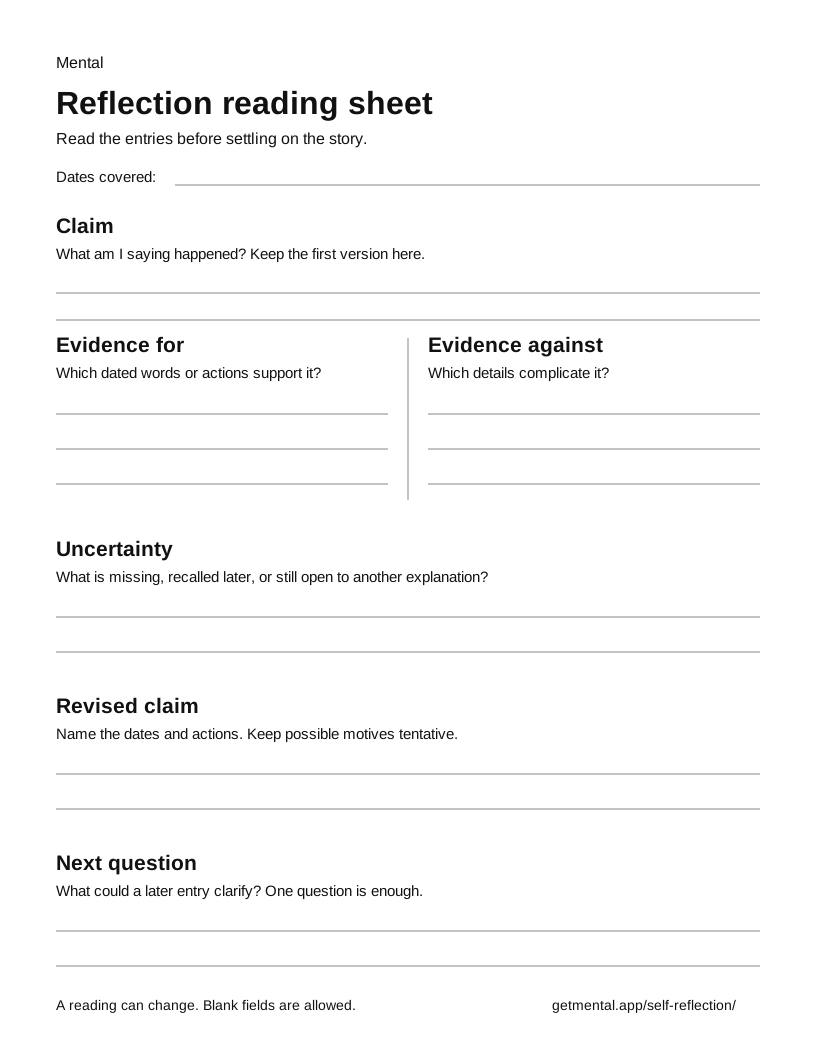
On paper, copy one claim and the dates it refers to. Add evidence for and against it, mark uncertainty, then write one next question. The sheet includes space to revise the claim after reading those notes.
Download the reflection reading sheet
One-page SVG. Open the saved file in a browser and print with “fit to page.” You can leave any field blank.
Choose what to revisit
If you have no entry to reread yet, the situational journal prompts offer places to begin. If your record is a timeline of labels, the mood chart reading lab shows what a daily summary can hide.
In the app, Mental Memory offers optional, revisable support for carrying details forward. This exercise is a reader’s editorial method; it does not show Memory automatically drawing these conclusions. Any interpretation still needs checking against the entries.
The fictional notes and reading sheet are original editorial work by Mental. They illustrate a way to reread a journal, with no claim to measure a personality or reveal a hidden cause.