
Journal prompts
A blank page can make an ordinary thought feel too small to write down. Pick the kind of moment you are in. One question, and a possible first sentence, may be enough to start.
Something just happened / One sentence
What changed in the room after it happened?
A visible detail gives the moment somewhere to begin.
Fictional first sentence “After the announcement, everyone started packing up before the call ended.”
Something just happened / One sentence
What did you do first, before deciding what it meant?
An action can be easier to name than an explanation.
Fictional first sentence “I put the letter on the kitchen table and took off my shoes.”
Something just happened / A few minutes
Where would you start this scene, and where would you stop it?
Choosing its edges keeps one event from becoming your whole day.
Fictional first sentence “I would start at the station, just before I saw my brother.”
Something just happened / A few minutes
What did you expect to happen, and which part actually surprised you?
Put an expectation beside an event without forcing them to agree.
Fictional first sentence “I expected questions about the delay, but we mostly talked about the drawing.”
Something keeps returning / One sentence
Which exact phrase keeps coming back?
Recording the wording gives a recurring thought a clear outline.
Fictional first sentence “The phrase is ‘I should have stayed five more minutes.’”
Something keeps returning / One sentence
What was happening the last time this thought interrupted you?
A small piece of context is enough; it need not explain the thought.
Fictional first sentence “It came back while I was waiting for the lift with my shopping.”
Something keeps returning / A few minutes
If this thought were a letter, which part is still unwritten?
An unfinished sentence can reveal what you have yet to say.
Fictional first sentence “I have written the complaint in my head, but not what I wanted instead.”
Something keeps returning / A few minutes
What do you know about this thought’s subject, and what are you filling in?
Separate a remembered detail from a guess without demanding certainty.
Fictional first sentence “I know the message was short; I am filling in the reason.”
A quiet day / One sentence
What was ordinary, but worth keeping?
Small details can make a day recognizable later.
Fictional first sentence “The bus was late, and I watched the rain stop.”
A quiet day / One sentence
What sound would put you back in this day?
A sensory detail can carry a day with no headline.
Fictional first sentence “The spoon tapped the cracked blue mug while the flat was still quiet.”
A quiet day / A few minutes
Choose one ordinary object: where did it go with you today?
Following an object gives a small day a sequence.
Fictional first sentence “My canvas bag went from the door to the library and came home with one book.”
A quiet day / A few minutes
Which part of today would be invisible to someone reading your calendar?
An empty schedule can still hold an event worth describing.
Fictional first sentence “There is no appointment for the half hour I spent sorting old buttons.”
A decision / One sentence
Which part of this choice is already clear?
Start with a boundary you can name, even if the decision stays open.
Fictional first sentence “I know I do not want to spend another Saturday travelling.”
A decision / One sentence
What is one thing you would need to know before choosing?
One missing fact makes a more specific starting point than a verdict.
Fictional first sentence “I need to know whether the class can move to a different evening.”
A decision / A few minutes
Write an ordinary Tuesday after each option: what would you actually be doing?
Everyday consequences can be more concrete than a list of abstract advantages.
Fictional first sentence “If I take the nearer flat, I would walk home past the market after work.”
A decision / A few minutes
Which inconvenience would you accept for each option, and which would you resent?
A choice can include a cost without becoming a mistake.
Fictional first sentence “I could accept a smaller kitchen; I would resent having nowhere to sit outside.”
A relationship / One sentence
What small thing did someone do that you want to remember accurately?
A precise gesture needs no conclusion about the whole relationship.
Fictional first sentence “Nina moved her bag so I could sit beside her.”
A relationship / One sentence
What did you leave unsaid in the last conversation?
A private note can hold a sentence without becoming a message to send.
Fictional first sentence “I wanted to say that I had been looking forward to the walk.”
A relationship / A few minutes
Describe one conversation through its pauses: what happened between the words?
Turn-taking, delays and interruptions offer details beyond the quoted lines.
Fictional first sentence “After I mentioned the move, we both watched the waiter clear the plates.”
A relationship / A few minutes
What do you want to ask this person, and what answer are you already imagining?
Keep the question and the imagined answer visibly separate.
Fictional first sentence “I want to ask whether Sunday works, but I have already rehearsed a refusal.”
A week to revisit / One sentence
Which unfinished thing can stay unfinished in this week’s record?
A journal entry need not tidy up every loose end.
Fictional first sentence “The shelf is still in pieces by the door, and that is where this week ends.”
A week to revisit / One sentence
What would you put in the margin beside this week’s dates?
A short side note can preserve something a calendar leaves out.
Fictional first sentence “This was the week the neighbour’s cat started waiting on our step.”
A week to revisit / A few minutes
Choose two days that felt unlike each other: what would their opening scenes be?
Start two small scenes without making either represent the whole week.
Fictional first sentence “Monday opens with a crowded tram; Thursday starts with toast at my sister’s table.”
A week to revisit / A few minutes
What did you make room for this week, and what had to wait?
Describe how time was used before deciding what that says about you.
Fictional first sentence “I spent Wednesday helping with the move, so the book stayed closed.”
Twelve questions to take with you
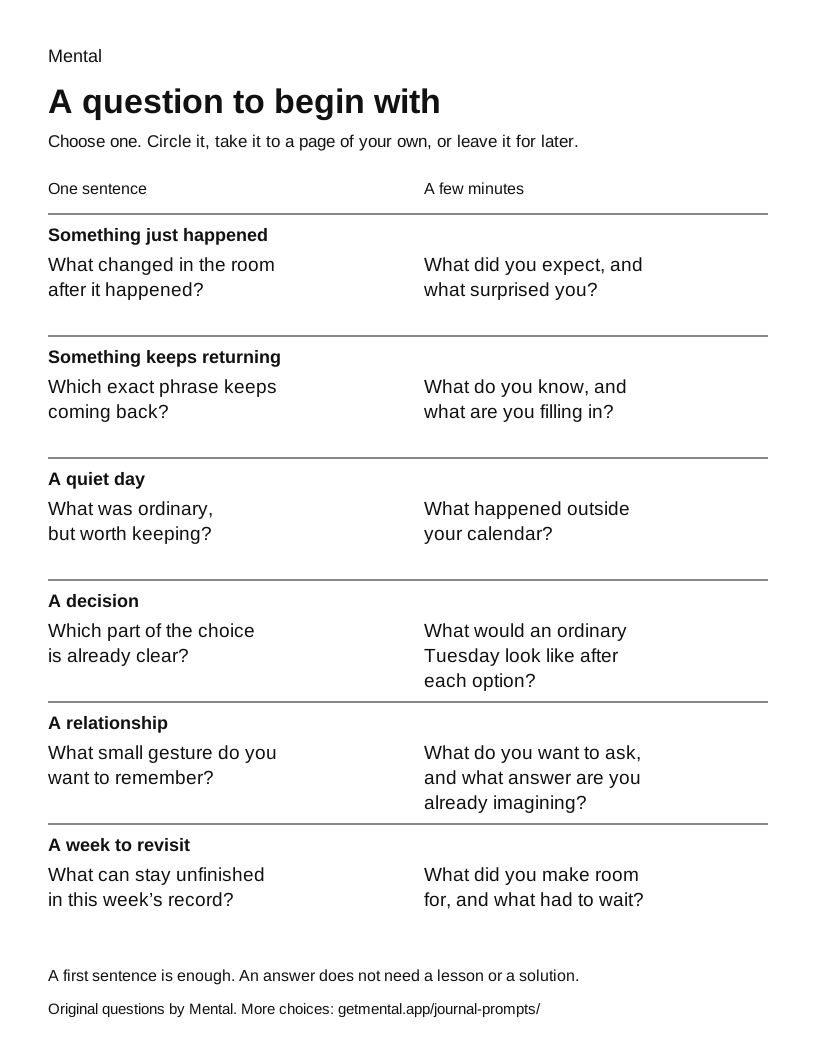
The one-page card keeps two questions for each situation: one for a sentence and one for a longer start. They are shortened for print, with room to circle the question you want.
Download the twelve-question card
One-page SVG. Open the saved file in a browser and print with “fit to page.”
A question opens an entry
You can leave the question behind once a detail gives you somewhere to go. If you want to compare ways of writing the entry itself, see three different ways to begin a journal. For the narrower task of recording how you feel, use the short mood check-in method.
The questions about a week are invitations to write a new note. Rereading old entries and testing a story against them is a different task; a prompt does not settle what a week meant.
About this selection
These questions, explanations, fictional first sentences, and the print selection are original editorial work by Mental. The International Association for Journal Writing’s guide to journaling provides background on using different writing methods, including structured and free-form approaches. These prompts were not taken from that guide.