
How to journal
You open a blank page. There are two minutes before the kettle boils. You could keep one moment, follow a thought, or leave yourself a question. Each is a place to begin.
Three starts for one fictional Tuesday
At 3 p.m., a meeting was moved to Friday. You had spent the morning preparing a drawing to show. You closed the file, made tea, then opened it again. Here are three alternative entries about that one afternoon.
One sentence
Keep a moment
“The meeting moved to Friday, and I felt relieved to have more time but disappointed to put my drawing away.”
- What it captures
- A specific event and two reactions. This is enough to recognise the afternoon later.
- What it leaves out
- What was in the drawing and why sharing it mattered. You can add that another time, or leave it here.
Freewrite
Follow a thought
“Friday now. More time to fix the corner I don’t like. But I was ready to show it today. Or ready to be done waiting? Tea went cold while I opened the file again. I keep moving that one line. Maybe the drawing was finished this morning. No, the corner still bothers me. I wanted someone else to look.”
- What it captures
- The movement of a thought, including hesitation and a change of mind. The crossed wires stay visible.
- What it leaves out
- A settled explanation. “I wanted someone else to look” is a thought reached while writing, not a proven cause.
Observation and a question
Leave something open
“After the meeting moved, I reopened the drawing twice without changing it.
What did I want from today’s meeting that another hour of editing won’t give me?”
- What it captures
- An action you can describe and a question worth leaving unanswered for now.
- What it leaves out
- The rest of the afternoon, including the relief. This is a narrow view, not a complete account of the day.
Choose one. The longer entry is not the better version of the short one: it does a different job. A date and a detail you will recognise can be all the setup you need.
Choose the form for this entry
Make a choice for today; you can change it on the next page. These are practical trade-offs, not rules about the kind of person you are.
Paper or phone
Want to draw, cross out, or spread words around? Try paper. Decide where the notebook will live and who could open it.
Want to write while you are already out? Use a note on your phone. Before adding private details, check its lock, account, backup, and sharing settings.
Written or spoken
Want to choose each word as you go? Write or type. A fragment counts; you need not turn it into an essay.
Want to say the thought aloud first? Speak somewhere you will not be overheard, then keep a sentence in writing if you want a record. If you use a recording or dictation tool, check what it saves and where it sends it before speaking.
Freeform or structured
Already have a thread to follow? Use a freewrite. Leave repetitions and unfinished phrases until you decide whether any editing is useful.
Unsure where to enter? Borrow a small container: one sentence, or an observation followed by a question. Leave a field blank if it asks for something you do not know.
Private or shareable
Writing only for yourself? Shorthand can stay shorthand. You do not owe a future reader a polished story.
Intending to show someone? Keep a separate excerpt. Add the context they need, remove other people’s unnecessary details, and decide which parts you actually want them to read.
A first page, with room left over
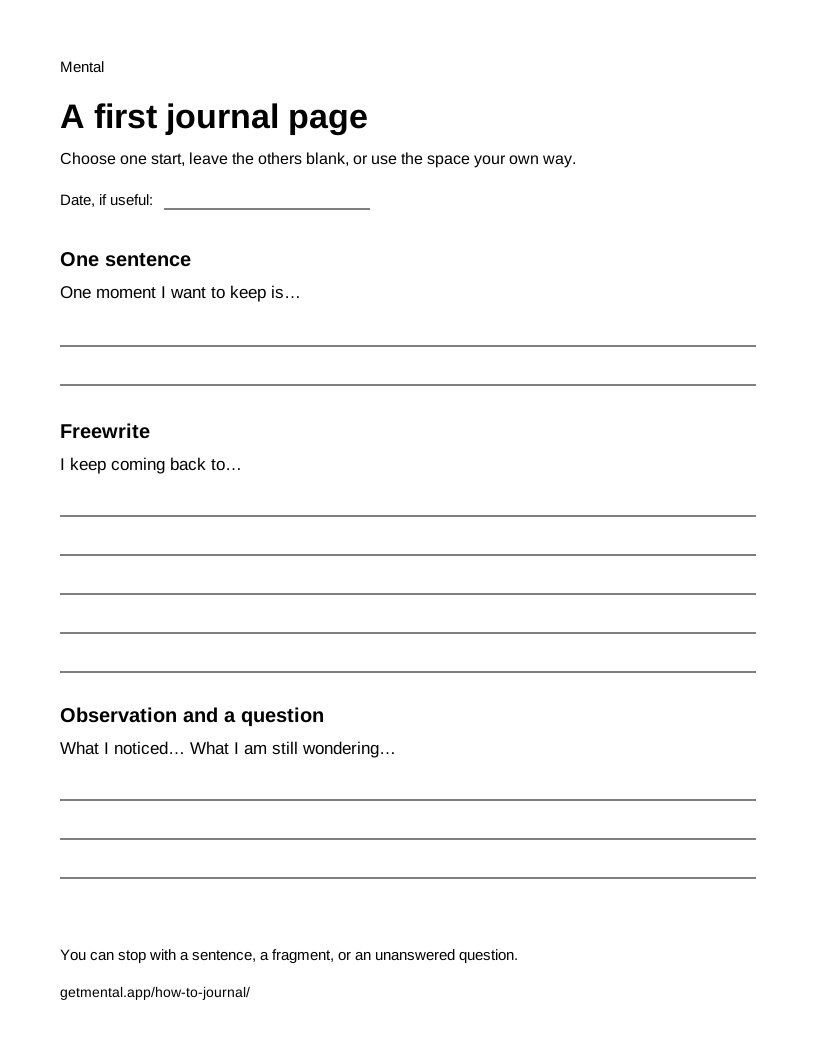
The printable has three optional starts. Pick one space, ignore the other two, or write across the whole page. The same invitations work in a notebook or a note you already use.
- One sentence
- One moment I want to keep is…
- Freewrite
- I keep coming back to…
- Observation and a question
- What I noticed… What I am still wondering…
Download the first journal page
One-page SVG. Open the saved file in a browser and print with “fit to page.” Nothing needs to be filled in on this website.
When to put the page down
For this first attempt, you can stop when the kettle boils, when your sentence is finished, or while the question is still open. Closing the notebook does not require a lesson, a solution, or a positive ending.
If you notice yourself polishing for an imaginary audience, repeating the same accusation, or feeling worse as you continue, you can stop. You do not have to push into a difficult subject to make the entry count. Choose a more ordinary detail next time, try another form, or leave journaling aside.
Returning tomorrow is an option, not a debt. An unwritten day does not need a replacement entry. If you return later, start with what you want to record then.
If you want to record a feeling
A journal can hold a sketch idea, a conversation, or a question without a mood label. If feelings are what you want to record, the short mood check-in method gives that specific task a structure. The emotion grid can help you start with energy and pleasantness when a word does not come easily.
About these beginnings
The International Association for Journal Writing’s guide to getting started describes a variety of journaling methods and ways to choose writing materials. It is the methods background for this page, not evidence that any one format works for everyone.
The Tuesday, its three entries, their annotations, and the printable are original editorial work by Mental. They demonstrate choices in writing, not a treatment method or a test of how well you know yourself.